Dethatching vs. Aeration: Which One Does Your Lawn Actually Need?
If you live in Coventry RI, you probably battle spring sogginess, summer heat spells, and heavy fall leaf drop. Those swings are tough on cool-season grasses. Many lawns respond with a spongy thatch layer or compacted soil, and that is when homeowners start asking if dethatching or core aeration is the better move. This guide explains the differences in plain language so you can choose confidently and schedule the right visit with Q's Quality Lawn Care, LLC.
For a deeper look at how our technicians approach both services, explore our professional dethatching & core aeration service and see what fits your yard’s goals. If you want a quick overview of our company and services in one place, you can also start at dethatching and aeration in Coventry RI to learn how we improve soil health and turf density around town.
What Is Thatch And Why It Matters
Thatch is a dense mat of dead and living stems, roots, and clippings that collects where grass meets soil. A thin cushion is normal. When that layer grows too thick, water beads on top, nutrients stall, and roots stay shallow. You might notice the lawn feels bouncy underfoot, turns brown quickly in dry weather, or fights off every sprinkler setting you try.
- Thatch thicker than three-quarters of an inch is a problem. At that point, the layer blocks air and water from reaching the soil.
- Spongy feel and mower tracks that linger are classic signs of excess thatch.
- Grass crowns sit on a dry pad, so heat stress and fungus can show up faster.
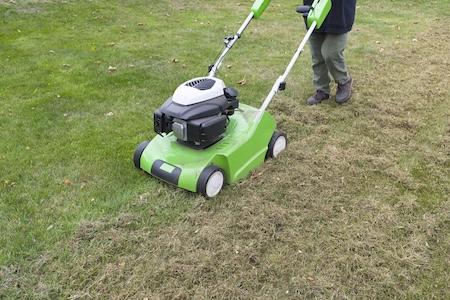
Dethatching removes that layer so turf can sit back down on the soil. After dethatching, water and nutrients reach roots again and mowing becomes easier. If your lawn feels like a wet sponge in spring and summer but the underlying soil is not rock-hard, dethatching is often the first step.
Soil Compaction: What Coventry RI Yards Show
Compaction happens when soil particles get pressed tight and the tiny air spaces collapse. In Coventry, we see it from foot traffic, pets, mowers turning in the same spots, and winter freeze-thaw. It is common along driveways, play areas, and fence lines. Compacted soil sheds water, roots grow sideways, and grass thins out in predictable paths.
Look for these compaction symptoms:
- Water puddles that linger after a rain, especially where you walk the most
- Hard, cracked ground in July even with regular irrigation
- Shallow roots that pull up easily when you tug a handful of grass
- Mower blades tearing rather than cleanly cutting
Core aeration helps by pulling small soil plugs to open channels for air, water, and nutrients. The cores crumble back in, improving structure. Recovery is steady, and thickening often improves over the next growing cycle as roots dive deeper.
Dethatching And Aeration In Coventry RI: How To Choose
Think of thatch and compaction as two different roadblocks. Thatch sits above the soil and blocks inputs from the top. Compaction is inside the soil and blocks growth from within. If a screwdriver sinks easily into the soil but the surface feels bouncy, dethatching likely comes first. If the screwdriver barely penetrates and the ground feels like concrete, aeration is the priority. Some lawns need both in the same season, starting with dethatching to clear the surface, then aeration to open the soil.
Here is a simple way to frame the decision for Coventry homeowners:
Choose dethatching when the lawn feels springy, mower wheels leave dents, and water beads on top even though the ground beneath is not rock-hard. Choose aeration when water puddles in ruts, dogs carve hard paths, or you struggle to push a soil probe or screwdriver more than an inch. For mixed symptoms, our team often creates a plan that pairs both services, timed to local weather for the best recovery.
Best Timing For Rhode Island Lawns
Cool-season turf in Rhode Island responds best when soil is warm enough for root growth but air temps are easing. For Coventry, that generally means late August through October for core aeration and paired services. Spring can work too after the ground dries out, typically late April into May, but avoid the very early thaw when wet soil can smear and compact. Do not aerate when soil is saturated or frozen, and skip heavy dethatching in peak summer heat when turf is under stress.
Timing also depends on your goals. If thickening is the priority, pairing aeration with overseeding in early fall helps new roots take hold before winter. If your main issue is a stubborn thatch layer from years of dense growth and heavy fertilizer, an early fall dethatching followed by light topdressing may set the stage for healthier growth next season. When you want a complete seasonal plan, our lawn care services can coordinate timing with your mowing and leaf cleanup so everything works together.
What A Professional Service Includes
Every yard is different, but a professional visit follows a careful rhythm. First, a technician assesses thatch thickness, soil condition, traffic patterns, shade, and drainage. Next comes dethatching if needed, with equipment set to the correct depth for your grass type. Then core aeration targets compacted zones and high-traffic routes, with extra passes where the soil is tight. Cleanup is tidy, leaving the beneficial plugs to decompose while removing surface debris so the lawn can breathe again.
We keep an eye on edges, slopes, irrigation heads, and utility boxes. That protects your property and ensures even results across the lawn. If you are considering overseeding, we will note whether conditions are right and whether the seed-to-soil contact will be strong enough to succeed. The aim is simple: healthier soil, deeper roots, and thicker turf that handles Rhode Island weather swings with less stress.
Results You Can See
Most Coventry homeowners notice quicker water absorption, improved color, and steadier mowing lines within a few weeks, with bigger changes showing up after a full growth cycle. Lawns typically feel firmer underfoot once the spongey layer is gone, and bare spots in compacted areas start to fill. The payoff builds over time as roots grow deeper and soil structure improves.
- More consistent watering and fewer puddles after storms
- Deeper roots that handle short dry spells better
- Cleaner cuts and fewer ragged blades after mowing
- Healthier, thicker turf that resists weeds and disease pressure
If you want to see how this plays out on your property, our team can walk the lawn with you, point out the stress patterns, and map the right sequence. You can preview our approach here: our dethatching & aeration service for Coventry homeowners.
Local Scenarios We See Around Coventry
Near Johnson’s Pond, we often find compacted soil along the lake-facing sides where foot traffic is heavy and gear gets stored. Aeration helps these areas shed water and grow thicker turf again. In western Coventry, larger lots with mature trees can build thick thatch from years of needle and leaf drop. Carefully timed dethatching opens the surface, then the lawn can breathe and take in moisture.
Along busier streets and cul-de-sacs, mowers turn in the same spots week after week. Those arcs become hardpan and thin out, even when the rest of the yard looks fine. Concentrated aeration passes in those turns, combined with seasonal maintenance, usually restore density. Shady play areas near fences and swing sets are another trouble zone. Here we test thatch and compaction separately and choose the sequence that helps the grass recover before the next season’s traffic.
Why Choose Q's Quality Lawn Care, LLC For Dethatching & Aeration
Our team focuses on soil health first. We look below the blades, read the lawn’s trouble signs, and then match the service to your goals. Crews are trained to protect irrigation heads, landscape beds, and hardscape edges. We plan around weather windows and keep communication clear, so you know what is happening and when. Most of all, we respect your property, clean up carefully, and leave the lawn set up for success.
If you want steady results season after season, pairing these services with routine maintenance is key. We can time visits around leaf drop and spring thaw so your lawn spends more time growing and less time recovering. When you are ready, call 401-935-5069 to talk with a friendly local specialist who knows Coventry’s soils and seasons.
Ready For A Thicker, Healthier Lawn In Coventry RI?
You do not have to guess your way through thatch and compaction. Our local team will evaluate your turf, explain the findings in plain English, and handle the service with care. To get moving, reach out to Q's Quality Lawn Care, LLC at 401-935-5069 or schedule a visit through our dethatching & aeration page. The right service at the right time makes every drop of water, sun, and fertilizer work harder for your lawn.
Find The Quality In Your Lawn With Our Lawn Services In Coventry & Surrounding Areas